When your real happy ever after is you walking away
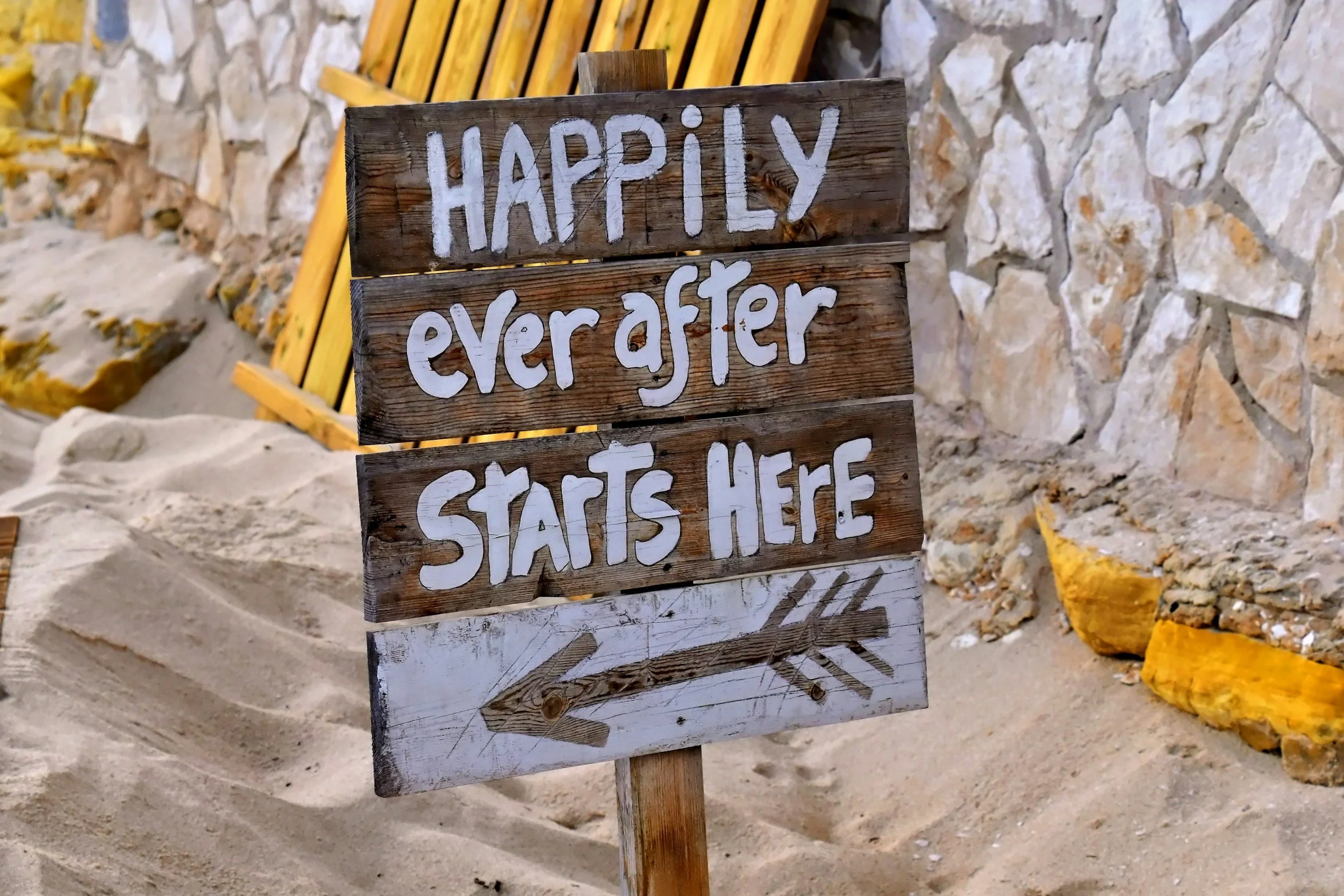
Sign post to happily ever after on sandy beach
Many of the messages we get from books, films and the media suggest the following:
*Forgive and forget
It’s not worth falling out for
Marriage is for life
Family is what’s most important
Blood is thicker than water
Just apologise and move on
Turn the other cheek
They love you really, they just don’t know how to show it…
The society we live in views some relationships as sacred and, even when aware of an abusive pattern of behaviour, a shocking number of people suggest reconciliation. While I think taking responsibility for our actions, reflecting on our part and avoiding getting stuck in victim are important, I also believe there are some people it is necessary to keep at arms’ length for our own safety.
These aren’t people who have accidentally caused us pain; these are people who are trying to hurt us. If anyone is persuading you to move towards someone who is abusive and is actively causing you pain (and I’m sorry to say this does happen in therapy), then I believe this person is doing you a disservice.
It is as if our society doesn’t like to admit there are mean, cruel and vindictive mothers, wives, husbands, partners, fathers, children, siblings in our lives. This lack of acknowledgement makes holidays like Christmas, birthdays, Mother’s Day and Father’s Day difficult from those who have estranged themselves from family.
In working with those partly estranged, fully estranged or in a managing situation with Narcissistic partners and relatives, I’ve observed that most people on the receiving end of this situation have done a lot of soul searching:
They have often explored their part in the problem and wondered if they are to blame
They have explored if they might be Narcissistic – especially when their Narcissistic partner has told them they are
They’ve read self-help books
They’ve looked into therapy
They’ve gone back and tried out different ways of being with the Narcissistic partner
They may have attempted family therapy or couples therapy which left them feeling worse – more responsible and more guilty –while giving the Narcissist more data and more tools to abuse them with.
Like other difficult and painful situations, it is hard to understand what it is like to be on the receiving end of Narcissistic abuse for those people who haven’t experienced it. It is tough to have a Narcissist parent who plays up any time the attention is not on them. Or to share child contact with a Narcissist who weaponizes your children to continue controlling you. Friends who don’t understand the nature of these characters might suggest and advise you work on communication or you cut the Narcissist some slack, because this might be reasonable advice if you were dealing with an ordinary person (but you are not). Even if you have decided to distance yourself from an abusive partner or family member, you may need to be careful who you tell because people who don’t ‘get it’ can undermine you and make you feel worse.
Why is distance in important even after you have begun to recover, build your self-esteem and strengthen your boundaries? Because this person knows which buttons to press. They may bait you, project their faults on to you, smear you to mutual friends and others, gaslight you. Also, they may hoover you – a temporary return to love-bombing - to get your back before the abuse begins again. Covert narcissists may up their levels of victimhood: ill-health, depression, suicide threats to pull your rescuer. This is why keeping them at arms’ length while working to strengthen your boundaries is essential.
They want to maintain control over you. They don’t want you to be separate from them and free of their influence.
So if you have experienced Narcissistic abuse, you are part of an exclusive club you never wanted to be in. And the general population may well not understand the extent of your suffering and the gravity of the abuse doled out on to you. It is not up to you to explain it to them either or to justify your position. But to spare yourself, it may be useful to be aware that it is okay to choose who you tell about your experience with care.
And if you need therapeutic support or legal support, check out with that professional their understanding of the dynamics created by Narcissists so you have the right people to guide you as you separate from this toxic dynamic.